Pakistan-Iran border trade stumbles on paperwork despite partial reopening
Freight movement has resumed at key crossings, but a dispute over digital import forms is holding up Iranian shipments.
By Sofia Herrera ·
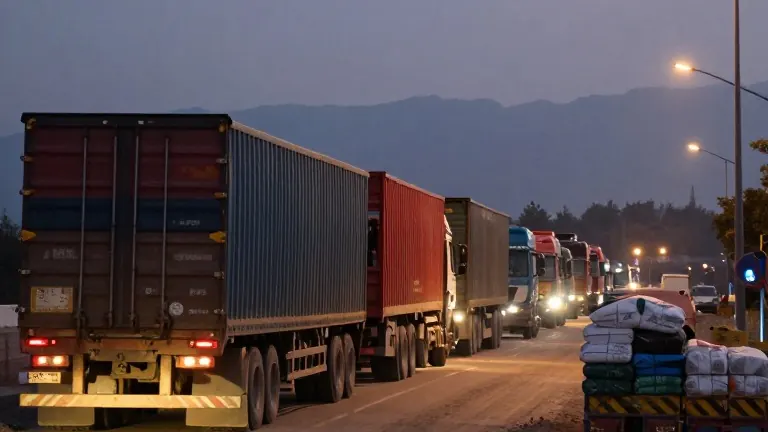
Trade between Pakistan and Iran has partially resumed after a nine-day halt, but administrative disputes are now slowing the flow of goods. While Pakistani exporters began moving products across the border on Monday, Iranian officials say new paperwork requirements are preventing their cargo from being cleared. The friction has emerged just as Pakistan seeks to restore energy supplies and normalize economic ties with its neighbor.
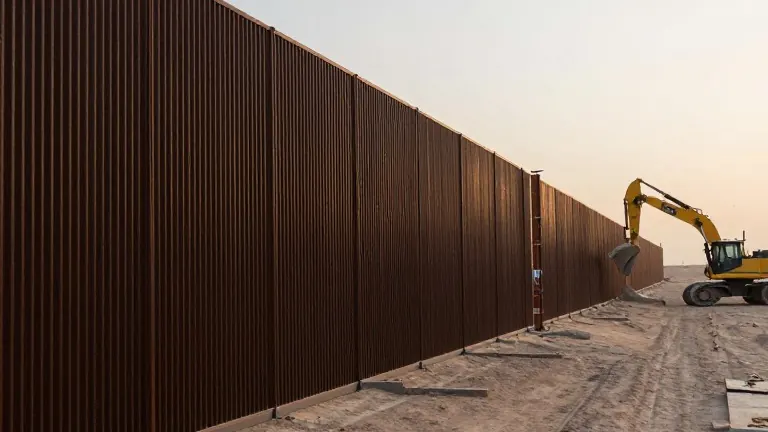
Islamabad suspended cargo traffic at the Gabd-Rimdan and Taftan crossings in Balochistan province on October 17, citing security risks. On Monday, goods started to move again. Mir Naveed Jan Kalmati, president of the Gwadar Chamber of Commerce and Industry, stated that trade partially resumed over the weekend. Border officials cleared consignments dated October 16 or earlier, according to goods truck association officials. Haji Noor Muhammad Shahwani, central president of the Balochistan Goods Truck Owners Association, confirmed that Pakistani exports including rice, bananas, and potatoes were crossing the border. He noted that trucks loaded in Iran before the closure, including those carrying liquefied petroleum gas, were also entering Pakistan, though they were moving slowly.
The halt in Iranian LPG imports had created severe shortages and price spikes in Pakistan, which relies on the Middle East for a large portion of its energy. Rizwan Ahmed, a customs clearing agent near the Gabd-Rimdan crossing, said customs told agents to file declarations for stranded trucks to release them. Ahmed added that his own consignment of exports had just left. However, Iran contends that changes to import paperwork introduced by Islamabad are holding up its cargo. Reza Amiri Moghadam, Iran’s ambassador to Pakistan, wrote on X on Sunday that traders are effectively unable to dispatch cargo from Iran to Pakistan due to changes in the implementation of Pakistan’s E-Form procedure.
The E-Form, also known as the EIF, is used to record imports and their payment through banks. A Commerce Ministry memorandum seen by Al Jazeera on October 16 withdrew a previous waiver on the E-Form for imports from Iran. Moghadam said consultations with Pakistan were under way and that several hundred LPG trucks had crossed into Gabd but remained unloaded. Shahwani said the unloading problem had not been resolved, suggesting it was likely a banking issue related to international trade. Bakhtiar Ismail, the deputy commissioner of Chagai, described the closure on October 18 as a temporary measure to improve border management and support counterterrorism efforts.
The trade halt follows a security incident in which gunmen attacked trucks near the Gabd crossing on Thursday. The military reported that 10 attackers were killed in operations around Gabd and Gwadar city, along with one civilian. Balochistan accounted for 131 of the 225 armed attacks recorded nationwide in September, the highest monthly national total in 12 years, according to the Pakistan Institute for Conflict and Security Studies. Pakistan’s foreign ministry spokesman, Sajjad Haider Khan, said at a Friday briefing that Pakistan would continue to adhere to all applicable sanctions regimes. He did not confirm whether the border was fully open or if the United States had pressured Pakistan over the closure. The Ministry of Commerce did not respond to requests for comment.
Pakistan has mediated between Washington and Tehran since the US-Israel war on Iran began on February 28. The US imposed a naval blockade on Iranian ports and wide-ranging economic sanctions to cut off Iranian revenue streams. Security analyst Imtiaz Baloch noted that US maximum pressure policies may influence the closure directly or indirectly through banking channels. He assessed that security, technical glitches, and the banking system are all factors in the current situation.
Source: Al Jazeera
More Business · Consumer Alerts · Report a business · Got a Story?